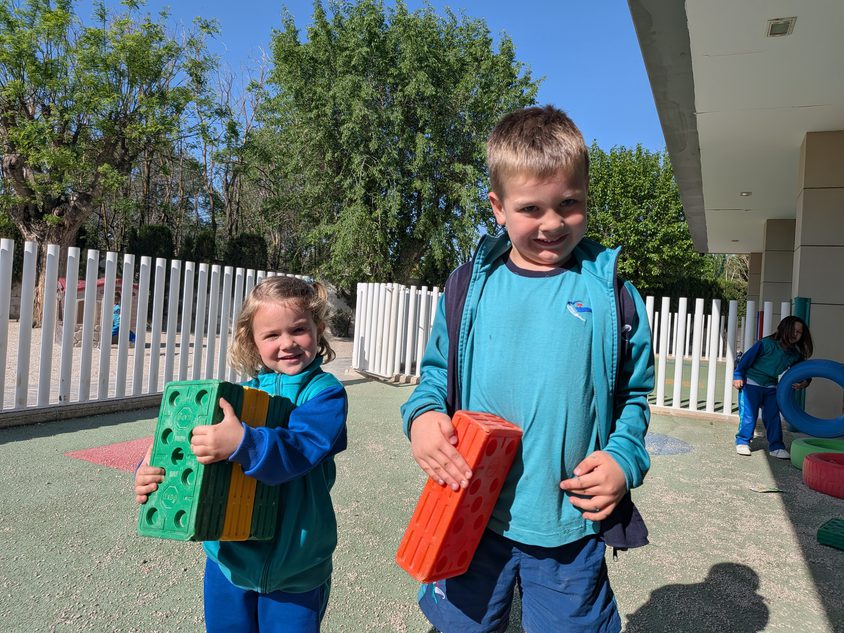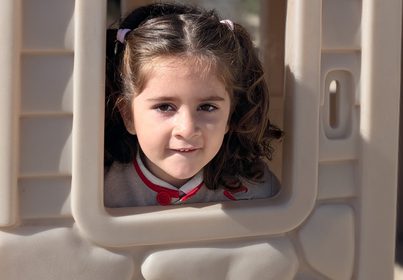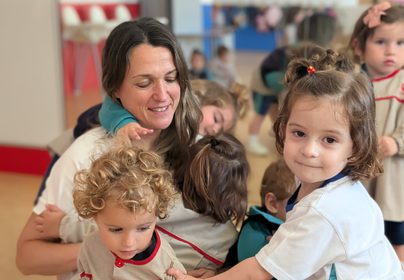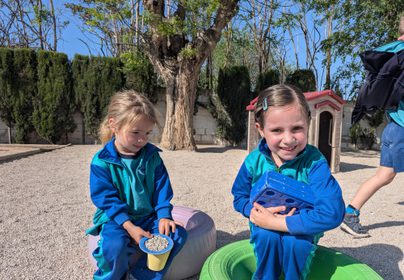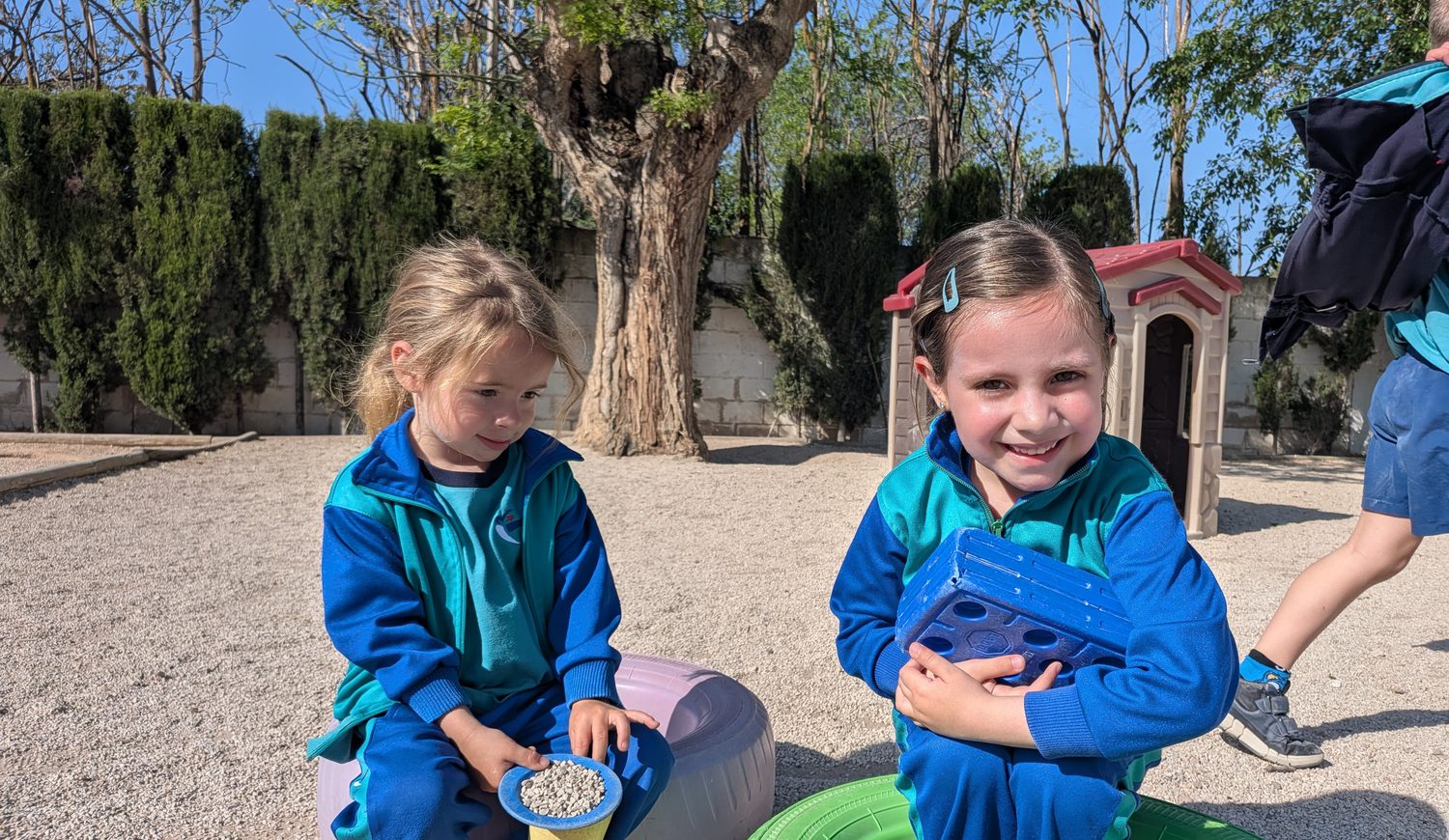
Leading on from early years, enquiry takes on even greater importance at this stage, aiming to stimulate our students’ natural curiosity through project-based learning (PBL) with an open-ended perspective, allowing students to approach and solve the same situation in different ways.
Immersive bilingualism becomes a reality at this stage. Fifty per cent of the curriculum is delivered in English, thanks to our native and bilingual teaching staff. This enables our students to develop excellent oral fluency, acquired naturally, as if it were a second mother tongue. By the end of Primary Education, our students achieve at least an A2 level in English according to the Common European Framework of Reference for Languages (CEFR), with some reaching B1.
In Mathematics, we use the Singapore Method: a pedagogical approach focused on deep understanding and problem-solving, rather than memorising formulas. It follows a sequential programme—concrete (hands-on), pictorial (visual representation), and abstract (symbols)—allowing students to visualise concepts, develop logical thinking, and apply mathematics to real-life situations. This method is based on constructivist theories from authors such as Jerome Bruner.
Language learning is developed through the Ludiletras creative literacy programme, which teaches reading and writing in a playful, hands-on and meaningful way. Ludiletras is based on the theory of multiple intelligences, aiming to stimulate different student abilities (visual, spatial, logical, etc.) throughout the literacy process.
Music is taught through the Suzuki Method, a pedagogical approach also known as the “mother tongue method,” where musical skills are developed in the same way as learning a native language. The Suzuki Method emphasises listening, memorisation, and imitation from an early age, with close collaboration between teacher, student, and parents. In addition, musical language is taught through the Music Mind Games method, designed to teach music theory and reading through engaging, cooperative, and stimulating games.
We place strong emphasis on our students’ emotional development, understanding it as the foundation of wellbeing. Our dedicated emotional intelligence programme gives students the tools to recognise, understand and manage both their own emotions and those of others, fostering skills such as self-regulation, empathy, and resilience. This in turn enhances their social relationships.
Our sports pavilion is truly exceptional: a space of over 900m² dedicated to sport and the development of motor skills, with capacity for up to three groups simultaneously.
We also have a dedicated inclusion programme. This includes weekly support sessions for students who require additional help, as well as an enrichment programme for high-ability students.